Buy hdstreams.eu ?
We are moving the project
hdstreams.eu .
Are you interested in purchasing the domain
hdstreams.eu ?
domain@kv-gmbh.de · 0541-91531010
Buy hdstreams.eu ?
How can I access one Access Point from another Access Point when I am at an Internet access point?
To access one Access Point from another Access Point when you are at an Internet access point, you can use a Virtual Private Network (VPN) connection. By connecting to a VPN, you can securely access resources on one network from another network, such as accessing one Access Point from another. This allows you to establish a secure connection between the two Access Points and access the desired resources remotely. Additionally, you can use remote desktop software or SSH (Secure Shell) to access the other Access Point from your current location. **
How do I access my access point?
To access your access point, you will need to connect to the same network that the access point is on. Once connected, open a web browser and enter the IP address of the access point in the address bar. You may need to enter a username and password to log in to the access point's settings. From there, you can configure and manage the access point as needed. **

Similar search terms for Access point
Top-Angebote
Products related to Access point:
-
TP-LINK TL-WA801N WiFi Access Point - N300, Single BandThe TP-Link TL-WA801N N300 WiFi Access Point is designed to extend and improve wireless network coverage in homes offices and other environments. With Wireless N technology and speeds of up to 300Mbps on the 2.4GHz band it provides a reliable connection for everyday browsing streaming and connected devices. Using 2x2 MIMO technology and two fixed omnidirectional antennas the access point helps maintain a stable wireless connection while reducing the effects of interference and signal degradation. It is suitable for connecting devices such as computers printers game consoles and network storage to a wireless network. The TL-WA801N supports multiple operating modes including Access Point Multi-SSID Client and Range Extender modes. This flexibility allows it to be configured for different networking requirements including extending an existing WiFi network or creating additional wireless networks. Passive PoE support provides flexible installation by allowing power and data to be carried through an Ethernet cable. The device can be positioned up to 30 metres from the power source when using the included passive PoE injector making it suitable for convenient wall or ceiling placement. Security features include WEP WPA WPA2 and WPA WPA2-PSK encryption, while WMM Quality of Service helps prioritise network traffic. With a compact white design one Ethernet port and simple web-based management the TL-WA801N provides a practical solution for expanding wireless network coverage.38,49 £*Shipping: 0,00 £Secure redirect to the provider
-
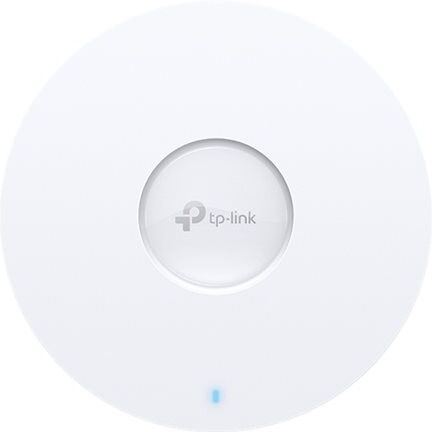
TP-LINK Omada EAP650 AX3000 Ceiling Mount WiFi 6 Access PointEnterprise-grade Wi-Fi 6 access point delivering up to 2402 Mbps on 5 GHz and 574 Mbps on 2.4 GHz. Supports 250+ concurrent clients across 16 SSIDs with cloud-based management and PoE+ power delivery. Compact wall/ceiling mountable design (16 x 16 x 3.36 cm) backed by limited lifetime warranty.99,49 £*Shipping: 0,00 £Secure redirect to the provider
-
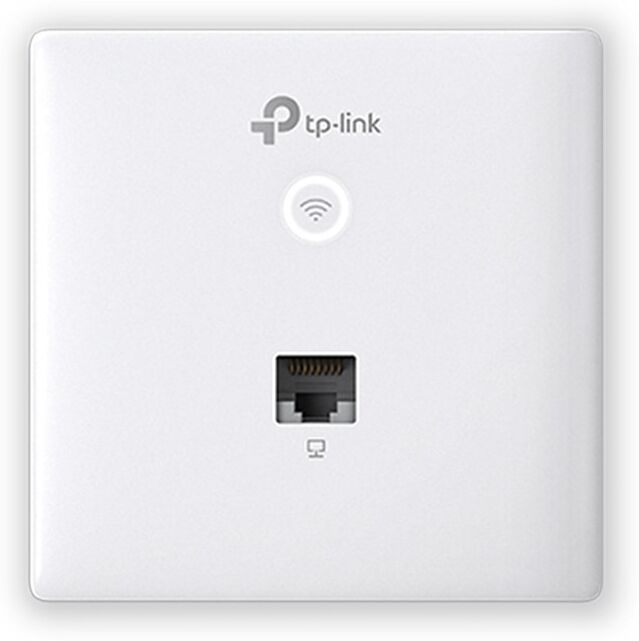
TP-LINK Omada EAP230-Wall AC1200 Dual-Band Gigabit Wall-Plate Access PointFast Dual-Band Wi-Fi: Simultaneous 300 Mbps on 2.4 GHz and 867 Mbps on 5 GHz totals 1,167 Mbps Wi-Fi speeds with MU-MIMO, 2 Gigabit Ethernet ports (1× uplink + 1× downlink) Integrated into Omada SDN: Zero-Touch Provisioning (ZTP), Centralized Cloud Management, and Intelligent Monitoring Private Connection for Every Room: Designed to meet every network need in environments with numerous separated rooms, like hotels, offices, and dormitories Secure Guest Network: Along with multiple authentication options (SMS/Facebook Wi-Fi/ Voucher, etc.) and abundant wireless security technologies Easy Installation and PoE Support: Easy-mount construction, compatible with 86 mm & EU standard junction box, and 802.3af/at PoE support with lifetime warranty86,99 £*Shipping: 0,00 £Secure redirect to the provider


-
Which access point to choose?
When choosing an access point, it's important to consider factors such as the size of the area needing coverage, the number of users, and the types of devices connecting to the network. For smaller spaces or home use, a single access point may be sufficient. However, for larger areas or businesses with high user density, a mesh network or multiple access points may be necessary to ensure reliable coverage. Additionally, it's important to consider the access point's features such as security protocols, management capabilities, and scalability to meet current and future needs. **
-
Was no WLAN network access point found on the Grundig TV?
Yes, no WLAN network access point was found on the Grundig TV. This means that the TV does not have built-in Wi-Fi capabilities and cannot connect to wireless networks for internet access. Users will need to use alternative methods, such as connecting via Ethernet cable or using external devices like streaming sticks, to access online content on the TV. **
-
Who invented the access point and when?
The access point was invented by Dr. Victor Hayes, who is often referred to as the "Father of Wi-Fi." He developed the concept of the access point while working at NCR Corporation in the early 1990s. The first wireless access point was created to enable the connection of multiple devices to a wireless network, and it laid the foundation for the widespread adoption of Wi-Fi technology. **
-
How does a WLAN access point work?
A WLAN access point works by receiving data from connected devices and transmitting it to the network. It acts as a bridge between the wireless devices and the wired network, allowing them to communicate with each other. The access point also manages the network by controlling the flow of data and providing security through encryption and authentication. It broadcasts a wireless signal that devices can connect to, allowing them to access the network and the internet. **


Is the WLAN access point temporarily fully occupied?
To determine if the WLAN access point is temporarily fully occupied, you can check the number of connected devices and the bandwidth usage. If the access point has reached its maximum capacity for connected devices or if the bandwidth usage is consistently high, it is likely that the access point is fully occupied. You can also check for any error messages or performance issues reported by users to confirm if the access point is temporarily fully occupied. If the access point is fully occupied, you may need to consider adding more access points or upgrading the existing ones to accommodate the increased demand. **
Is the Wi-Fi access point temporarily full?
It is possible that the Wi-Fi access point is temporarily full if there are too many devices connected to it at the same time, causing congestion and slowing down the connection speed for all users. To resolve this issue, you can try disconnecting some devices or resetting the access point to allow for new connections. Additionally, contacting your internet service provider for assistance may help in troubleshooting the problem. **
Top-Angebote
Products related to Access point:
-
DrayTek VigorAP 1062C AX6000 Wi-Fi 6 Access PointDrayTek VigorAP 1062C (VAP1062C-K) Wi-Fi 6 (802.11ax) business access point with a combined wireless speed of up to 6000Mbps (AX6000). It can act as a master AP to manage other VigorAP units, supports WPA3, 802.1X/RADIUS authentication and multiple SSIDs, and is powered over Ethernet (IEEE 802.3at PoE). Supplied with a ceiling mount bracket, T-rail kit and fittings, ceiling mounting screws, an RJ-45 Ethernet cable and a quick start guide.242,49 £*Shipping: 0,00 £Secure redirect to the provider
-
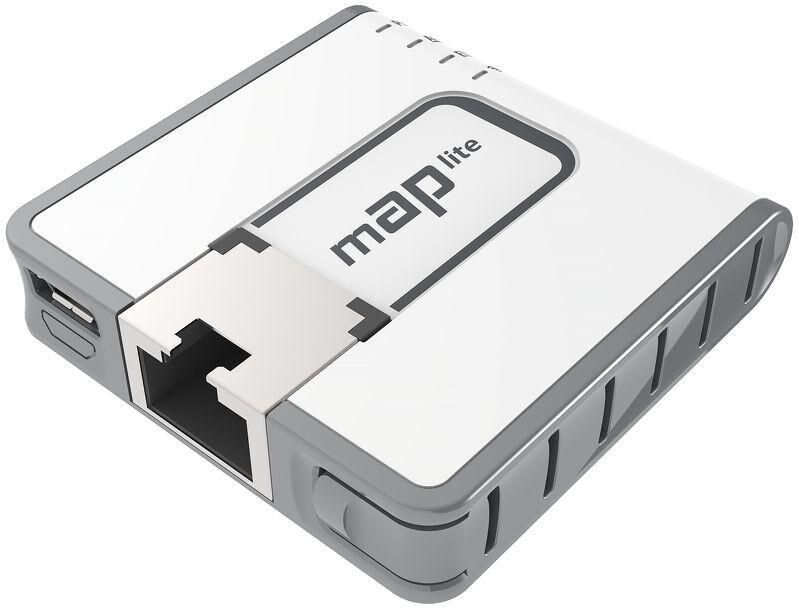
MikroTik mAP lite RBmAPL-2nD 2.4GHz Wireless Access PointMikroTik mAP lite (RBmAPL-2nD): a tiny 2.4 GHz 802.11b/g/n access point with integrated antennas, 650 MHz CPU, 64 MB RAM, one Ethernet port and RouterOS Level 4 licence, in a plastic case.48,99 £*Shipping: 0,00 £Secure redirect to the provider
-
TP-LINK TL-WA801N WiFi Access Point - N300, Single BandThe TP-Link TL-WA801N N300 WiFi Access Point is designed to extend and improve wireless network coverage in homes offices and other environments. With Wireless N technology and speeds of up to 300Mbps on the 2.4GHz band it provides a reliable connection for everyday browsing streaming and connected devices. Using 2x2 MIMO technology and two fixed omnidirectional antennas the access point helps maintain a stable wireless connection while reducing the effects of interference and signal degradation. It is suitable for connecting devices such as computers printers game consoles and network storage to a wireless network. The TL-WA801N supports multiple operating modes including Access Point Multi-SSID Client and Range Extender modes. This flexibility allows it to be configured for different networking requirements including extending an existing WiFi network or creating additional wireless networks. Passive PoE support provides flexible installation by allowing power and data to be carried through an Ethernet cable. The device can be positioned up to 30 metres from the power source when using the included passive PoE injector making it suitable for convenient wall or ceiling placement. Security features include WEP WPA WPA2 and WPA WPA2-PSK encryption, while WMM Quality of Service helps prioritise network traffic. With a compact white design one Ethernet port and simple web-based management the TL-WA801N provides a practical solution for expanding wireless network coverage.38,49 £*Shipping: 0,00 £Secure redirect to the provider
-
TP-LINK Omada EAP650 AX3000 Ceiling Mount WiFi 6 Access PointEnterprise-grade Wi-Fi 6 access point delivering up to 2402 Mbps on 5 GHz and 574 Mbps on 2.4 GHz. Supports 250+ concurrent clients across 16 SSIDs with cloud-based management and PoE+ power delivery. Compact wall/ceiling mountable design (16 x 16 x 3.36 cm) backed by limited lifetime warranty.99,49 £*Shipping: 0,00 £Secure redirect to the provider
-
How can I access one Access Point from another Access Point when I am at an Internet access point?
To access one Access Point from another Access Point when you are at an Internet access point, you can use a Virtual Private Network (VPN) connection. By connecting to a VPN, you can securely access resources on one network from another network, such as accessing one Access Point from another. This allows you to establish a secure connection between the two Access Points and access the desired resources remotely. Additionally, you can use remote desktop software or SSH (Secure Shell) to access the other Access Point from your current location. **
-
How do I access my access point?
To access your access point, you will need to connect to the same network that the access point is on. Once connected, open a web browser and enter the IP address of the access point in the address bar. You may need to enter a username and password to log in to the access point's settings. From there, you can configure and manage the access point as needed. **
-
Which access point to choose?
When choosing an access point, it's important to consider factors such as the size of the area needing coverage, the number of users, and the types of devices connecting to the network. For smaller spaces or home use, a single access point may be sufficient. However, for larger areas or businesses with high user density, a mesh network or multiple access points may be necessary to ensure reliable coverage. Additionally, it's important to consider the access point's features such as security protocols, management capabilities, and scalability to meet current and future needs. **
-
Was no WLAN network access point found on the Grundig TV?
Yes, no WLAN network access point was found on the Grundig TV. This means that the TV does not have built-in Wi-Fi capabilities and cannot connect to wireless networks for internet access. Users will need to use alternative methods, such as connecting via Ethernet cable or using external devices like streaming sticks, to access online content on the TV. **
Similar search terms for Access point
-
TP-LINK Omada EAP230-Wall AC1200 Dual-Band Gigabit Wall-Plate Access PointFast Dual-Band Wi-Fi: Simultaneous 300 Mbps on 2.4 GHz and 867 Mbps on 5 GHz totals 1,167 Mbps Wi-Fi speeds with MU-MIMO, 2 Gigabit Ethernet ports (1× uplink + 1× downlink) Integrated into Omada SDN: Zero-Touch Provisioning (ZTP), Centralized Cloud Management, and Intelligent Monitoring Private Connection for Every Room: Designed to meet every network need in environments with numerous separated rooms, like hotels, offices, and dormitories Secure Guest Network: Along with multiple authentication options (SMS/Facebook Wi-Fi/ Voucher, etc.) and abundant wireless security technologies Easy Installation and PoE Support: Easy-mount construction, compatible with 86 mm & EU standard junction box, and 802.3af/at PoE support with lifetime warranty86,99 £*Shipping: 0,00 £Secure redirect to the provider
-
TP-LINK EAP620 HD AX1800 Wi-Fi 6 Dual-Band Ceiling Access PointWi-Fi 6 access point supporting dual-band 2.4 GHz and 5 GHz frequencies with IEEE 802.11ax connectivity. Supports up to 16 configured SSIDs and features PoE power delivery. Wall or ceiling mountable design with dimensions of 24.3 x 24.3 x 6.4 cm. Includes 3-year warranty and mounting kit.147,49 £*Shipping: 0,00 £Secure redirect to the provider
-
Who invented the access point and when?
The access point was invented by Dr. Victor Hayes, who is often referred to as the "Father of Wi-Fi." He developed the concept of the access point while working at NCR Corporation in the early 1990s. The first wireless access point was created to enable the connection of multiple devices to a wireless network, and it laid the foundation for the widespread adoption of Wi-Fi technology. **
-
How does a WLAN access point work?
A WLAN access point works by receiving data from connected devices and transmitting it to the network. It acts as a bridge between the wireless devices and the wired network, allowing them to communicate with each other. The access point also manages the network by controlling the flow of data and providing security through encryption and authentication. It broadcasts a wireless signal that devices can connect to, allowing them to access the network and the internet. **
-
Is the WLAN access point temporarily fully occupied?
To determine if the WLAN access point is temporarily fully occupied, you can check the number of connected devices and the bandwidth usage. If the access point has reached its maximum capacity for connected devices or if the bandwidth usage is consistently high, it is likely that the access point is fully occupied. You can also check for any error messages or performance issues reported by users to confirm if the access point is temporarily fully occupied. If the access point is fully occupied, you may need to consider adding more access points or upgrading the existing ones to accommodate the increased demand. **
-
Is the Wi-Fi access point temporarily full?
It is possible that the Wi-Fi access point is temporarily full if there are too many devices connected to it at the same time, causing congestion and slowing down the connection speed for all users. To resolve this issue, you can try disconnecting some devices or resetting the access point to allow for new connections. Additionally, contacting your internet service provider for assistance may help in troubleshooting the problem. **
* All prices are inclusive of VAT and, if applicable, plus shipping costs. The offer information is based on the details provided by the respective shop and is updated through automated processes. Real-time updates do not occur, so deviations can occur in individual cases. ** Note: Parts of this content were created by AI.